Home › Services › Termite Control
Termite Control in Worcester, MA
Termites are the quietest expensive problem a Worcester home can carry. Subterranean termites work out of sight, in the soil and inside wood, and a colony can feed for years before a homeowner sees a single sign. By the time wood sounds hollow or a floor sags, the colony has usually been there a long time.
Call Now
Describe what you are seeing and where you are — a local pest control professional is connected from there.
Call NowMon–Fri 7:00 AM–10:00 PM ET · Sat 8:00 AM–10:00 PM ET · Sun 7:00 AM–9:00 PM ET
How termite control works in Worcester homes
Subterranean termites are the main structural threat locally. They live in the soil and travel to wood through mud tubes — pencil-wide tunnels of soil and saliva that run up foundations, across crawlspaces and through cracks in slabs. The tubes protect them from drying out, and finding a tube is finding the colony's road into the house.
Swarmers are the sign most homeowners actually see. In spring, winged termites leave the colony to start new ones, and they gather at windows and light fixtures. A pile of discarded wings on a windowsill means a mature colony is nearby. Swarmers are often mistaken for flying ants, and the difference matters: termite swarmers have straight antennae, equal-length wings and a straight waist.
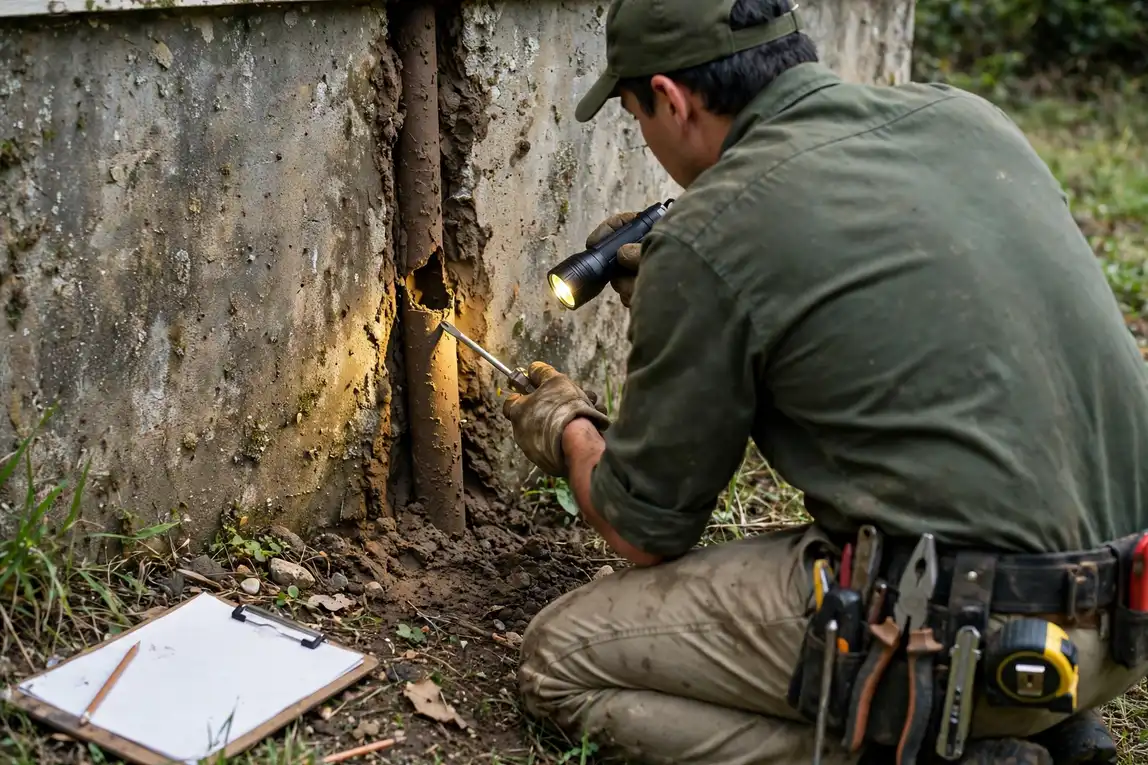
Termite damage is easy to miss and easy to mistake for water damage. Wood that sounds hollow when tapped, paint that bubbles or peels on a wall with no leak, floors that feel springy, and doors that stick for no clear reason are all worth an inspection. The visit uses a probe and a moisture check on the wood, not a guess from the surface.
- Foundation and crawlspace checked for mud tubes
- Basement sills, joists and support posts probed for hollow wood
- Spring swarmers and discarded wings identified on the spot
- Moisture sources noted — leaks, poor drainage, wood-soil contact
- Inspection findings explained in plain language before any treatment
What termite control includes
Full inspection
The inspection covers the foundation, basement and crawlspace, sills and joists, porches and decks, and the soil and mulch lines around the house. Every mud tube, damaged board and moisture source is noted.
Species confirmation
Swarmers and damaged wood are identified on the visit, so the plan fits the termite actually present — subterranean termites here — and not a flying-ant false alarm.
Treatment plan
The plan is explained before any work: where treatment goes, what it targets, and what follow-up looks like. The homeowner hears the plan in plain language, including what the treatment does not cover.
Soil and barrier work
Treatment is placed where termites travel — the soil along the foundation and the points where wood meets soil — so the colony's routes into the house are cut.
Wood treatment
Damaged and at-risk wood is treated where it can be reached, and the visit notes which boards need repair by a carpenter rather than treatment alone.
Follow-up inspections
Termite work is not one visit and done. The plan includes follow-up inspections, because a colony under pressure can shift to a new route, and the inspection is what catches it.
What happens when you call
Describe what you saw
On the call, describe the sign: mud tubes, swarmers, wings on a sill, hollow-sounding wood. When it appeared and where matters for the inspection.
Inspection of the structure
The visit walks the foundation inside and out, probes sills and joists, checks the crawlspace and the wood-soil contact points, and maps every tube and damaged board.
Findings explained
The findings are explained before any treatment — what was found, where the colony is feeding, and what the treatment will and will not do.
Treatment placed
Treatment goes into the soil along the foundation and onto the wood termites are using, placed where the colony travels rather than spread across the property.
Follow-up scheduled
A follow-up inspection is set, and the homeowner is told what to watch for — new tubes, new swarmers, or fresh damage — between visits.
How the work is done
The inspection is the method. A probe, a moisture meter and a torch do more than any product applied blind: they show which boards are hollow, which sills are damp, and where the tubes run. Treatment without that map treats the house, not the colony. The visit's written findings are the record the homeowner keeps — where tubes were found, which boards were damaged, and what was treated.
Soil treatment targets the colony's routes. Subterranean termites must stay in contact with soil moisture, so the treatment goes where they cross from soil to wood: the foundation line, the crawlspace soil, and the points where porches, decks and steps meet the house. Wood in direct contact with soil — a deck post, a porch sill, a fence run against the foundation — is noted for correction, because no treatment holds where wood sits in damp soil.
Moisture control is part of termite control. Leaking gutters, downspouts that dump at the foundation, mulch piled against siding, and crawlspaces with no ventilation all keep the soil and wood damp enough for termites to work. The visit lists the moisture fixes alongside the treatment, because dry wood and dry soil are the longest-lasting barrier.
Before the visit
Clear access to baseboards and the rooms with activity, pick up pet bowls and toys, and note where you have seen activity — the inspection follows your evidence.
Problem → solution
Problem
Mud tubes run up the basement foundation wall, and in spring a cloud of winged insects gathers at the basement windows. The sill above the tubes sounds hollow when tapped.
Solution
The inspection confirms subterranean termites and maps the colony's routes from the soil to the sill. Treatment goes into the foundation soil and the damaged wood, the downspout dumping at the wall is listed for correction — and the follow-up inspection checks that the tubes stay empty.
Problems termite control solves in Worcester
Mud tubes on the foundation
Pencil-wide soil tunnels on a foundation wall or in a crawlspace are the clearest sign of subterranean termites. Do not break them all off before the visit — the inspection reads them to find the colony's route.
Spring swarmers indoors
Winged termites at windows in spring mean a mature colony is nearby. Collect a few in a jar if you can, and note the date and the room — the visit identifies them on the spot.
Hollow or damaged wood
Wood that sounds hollow when tapped, or that a screwdriver sinks into easily, may be termite-damaged. The visit probes sills, joists and posts to map how far the damage runs.
Doors and floors that change
Doors that start sticking and floors that feel springy can be termite damage rather than settling. The inspection checks the framing below before anyone assumes the house has simply moved.
Other pest services in Worcester
Inspection-led ant control for Worcester homes and businesses.
Inspection-led spider control for Worcester homes and businesses.
Inspection-led cockroach control for Worcester homes and businesses.
Inspection-led mosquito control for Worcester homes and businesses.
Inspection-led rodent control for Worcester homes and businesses.
Inspection-led flea & tick control for Worcester homes and businesses.
Inspection-led general pest control for Worcester homes and businesses.
Frequently asked questions
Straight answers to the questions Worcester homeowners ask most.
Yes — Worcester sits in active termite country, and subterranean termites are the main structural threat locally. Because they work out of sight, annual inspections are the standard recommendation for homes here regardless of age.
Mud tubes are pencil-wide tunnels of soil and saliva running up foundations, across crawlspaces, or through cracks in slabs. Finding a tube means finding the colony's road into the house — report it rather than breaking it off before the visit.
Termite swarmers have straight antennae, two pairs of wings of equal length, and a straight waist. Flying ants have elbowed antennae, uneven wings, and a pinched waist. The visit identifies them on the spot if you are unsure.
Annual inspections are the standard recommendation here. A home with a history of termites, damp basements, or wood in contact with soil is checked on the schedule the inspection sets, not left for years.
Damaged wood is assessed board by board. Some boards are treated and kept; some need repair by a carpenter. The inspection maps the damage first, so the repair list is based on what was actually found.
Termite Control problem in Worcester?
Call now — we will connect you with an independent local provider for an inspection and a clear plan for termite control.
Call NowTalk to a local pest control professional
One call connects you with a local professional for Worcester and nearby towns. Describe what you are seeing — where, when, and how often — and the visit is arranged from there.
Mon–Fri 7:00 AM–10:00 PM ET · Sat 8:00 AM–10:00 PM ET · Sun 7:00 AM–9:00 PM ET
Service area
Shrewsbury, MA · Auburn, MA · Millbury, MA · Grafton, MA · Holden, MA · Westborough, MA · Northborough, MA · Leicester, MA · Sutton, MA · Oxford, MA · Boylston, MA · Paxton, MA
Worcester Pest Control Pros is a referral service connecting customers with local pest control professionals; it is not itself the service company.