Home › Services › Flea & Tick Control
Flea & Tick Control in Worcester, MA
Ticks wait rather than chase. They climb grass tips and shrubs and grab passing hosts, which makes the yard's edge — where lawn meets leaf litter, woodpile or deer trail — the critical zone. Worcester tick work concentrates on that shaded border; open sunny turf is rarely the problem, and the visit treats the edge, not the middle.
Call Now
Describe what you are seeing and where you are — a local pest control professional is connected from there.
Call NowMon–Fri 7:00 AM–10:00 PM ET · Sat 8:00 AM–10:00 PM ET · Sun 7:00 AM–9:00 PM ET
How flea & tick control works in Worcester homes
Ticks quest from the tips of grass and shrubs, waiting for a host to brush past. The nymphs — the size of a poppy seed — are active in late spring and early summer, and they are the ones most often missed. The yard edge where lawn meets leaf litter, woodpiles and stone walls is where ticks concentrate, because the leaf litter holds the humidity ticks need and the rodents that carry them.
Fleas live where pets rest: carpets, bedding, upholstered furniture, and the cracks of hardwood floors. The adult fleas on a pet are a small part of the population — the eggs, larvae and pupae are in the home, and they keep hatching for weeks. That is why a flea visit covers the rooms pets use, not just the pet, and why follow-up visits are part of the plan.
Rodents carry ticks into the yard. Mice are the main hosts for young ticks, and a yard with mice has ticks at its edge. The visit checks for the rodent runs and the leaf litter that shelters them, because the tick problem and the rodent problem share the same ground. Clearing the leaf litter and the woodpile does for ticks what sealing does for mice.
- Yard edge mapped — lawn meets leaf litter, woodpile, stone wall
- Tick resting areas identified — shaded border, tall grass, brush
- Indoor flea areas checked — carpets, pet bedding, upholstery
- Rodent hosts noted — mice runs and leaf litter that shelters them
- Follow-up visits planned — flea pupae keep hatching for weeks
What flea & tick control includes
Yard-edge treatment
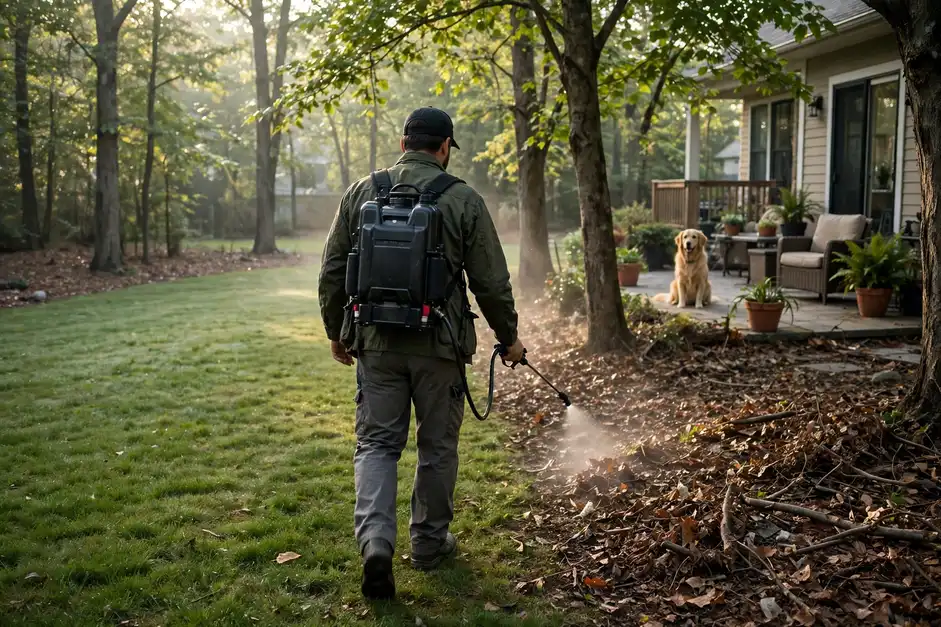
Treatment goes into the yard edge where lawn meets leaf litter, woodpile and stone wall — the shaded border where ticks quest — not across the open lawn.
Leaf litter and brush advice
The visit lists the yard work that cuts tick numbers: clearing leaf litter, moving the woodpile, cutting back brush at the edge, and keeping grass short where the family walks.
Indoor flea treatment
The rooms pets use are treated — carpets, pet bedding areas, upholstered furniture, and the floor cracks where flea larvae hide — so the indoor population is covered, not just the pet.
Pet-area checks
Pet resting areas are checked and the visit notes what the pet's own treatment covers and what the home treatment covers, so the two are not confused.
Rodent-host notes
Mouse runs and the leaf litter sheltering them are noted, because mice carry young ticks into the yard. The rodent notes connect the tick plan to the yard's wider pest picture.
Follow-up visits
Flea pupae keep hatching for weeks, so the plan includes follow-up visits. The visit explains the schedule before any treatment, and what to watch for between visits.
What happens when you call
Describe the problem
On the call, describe what you are seeing — ticks on the dog after the yard, flea bites indoors, ticks found on clothing after the garden — and where it happens.
Inspection of yard and rooms
The visit walks the yard edge mapping the tick zones, then checks the rooms pets use for flea signs, and notes the rodent runs feeding the tick population.
Treatment placed
Treatment goes into the yard edge and the indoor flea areas, placed where ticks quest and fleas live rather than spread across the property.
Yard work listed
The leaf litter, the woodpile, the brush at the edge and the grass height are listed for the homeowner, because the yard work is what keeps tick numbers down between visits.
Follow-up scheduled
Follow-up visits are set — fleas hatch over weeks, and ticks return to a yard edge that is left wild. The schedule is explained before the visit ends.
How the work is done
The yard edge is the method for ticks. Ticks quest from grass tips and shrubs at the border where lawn meets leaf litter, woodpile or deer trail, and they need the humidity that leaf litter holds. Treating that border reaches the ticks; treating the open lawn does not. The visit also lists the yard work — clearing leaf litter, moving the woodpile, cutting the brush back — because a cleared edge holds fewer ticks than a treated wild one.
Indoor flea work targets the life cycle, not the adults. The adult fleas on a pet are a fraction of the population; the eggs, larvae and pupae are in the carpets, the pet bedding and the floor cracks, and they hatch over weeks. Treatment placed in those areas, with follow-up visits timed to the hatching, is what ends a flea problem. A single visit that only treats the pet's resting spot leaves the next generation in the carpet.
Rodent hosts connect the two pests. Mice carry young ticks into the yard, and a yard with mice has ticks at its edge. The visit notes the mouse runs and the leaf litter sheltering them, and the tick plan and the rodent notes are handed over together, so the homeowner sees one yard problem instead of two separate ones.
Before the visit
Clear access to baseboards and the rooms with activity, pick up pet bowls and toys, and note where you have seen activity — the inspection follows your evidence.
Problem → solution
Problem
Ticks come in on the dog after every walk along the wooded yard edge, and flea bites appear indoors near the pet's bed. Leaf litter is piled along the fence.
Solution
The visit treats the shaded yard edge and the indoor pet areas, and lists the leaf litter for clearing and the woodpile for moving. The follow-up visits are timed to the flea hatching — and the ticks stop coming in on the dog.
Problems flea & tick control solves in Worcester
Ticks on pets after the yard
Ticks picked up in the yard come from the edge where lawn meets leaf litter and woods. The visit treats that border and lists the leaf litter and brush to clear.
Flea bites indoors
Flea bites indoors mean the population is in the carpets and pet bedding, not just on the pet. The visit treats the rooms pets use and schedules follow-ups for the hatching cycle.
Ticks on clothing after gardening
Ticks on clothing after working at the yard edge mean the border is holding a tick population. The visit treats the edge and the brush where the gardening happens.
Ticks every spring
Tick numbers climb every spring as nymphs quest in leaf litter. A yard edge cleared in early spring and treated before the nymph season holds fewer ticks all summer.
Other pest services in Worcester
Inspection-led ant control for Worcester homes and businesses.
Inspection-led termite control for Worcester homes and businesses.
Inspection-led spider control for Worcester homes and businesses.
Inspection-led cockroach control for Worcester homes and businesses.
Inspection-led mosquito control for Worcester homes and businesses.
Inspection-led rodent control for Worcester homes and businesses.
Inspection-led general pest control for Worcester homes and businesses.
Frequently asked questions
Straight answers to the questions Worcester homeowners ask most.
At the yard edge where lawn meets leaf litter, woodpile, stone wall or deer trail. Ticks quest from grass tips and shrubs there, because the leaf litter holds the humidity they need. Open sunny turf is rarely the problem.
Flea pupae keep hatching for weeks after the first treatment, so new adults appear in the carpets and pet bedding. Follow-up visits are part of the plan, timed to the hatching cycle.
Yes — mice are the main hosts for young ticks, and a yard with mice has ticks at its edge. The visit notes the mouse runs and the leaf litter sheltering them alongside the tick plan.
Clear leaf litter, move the woodpile away from the house, cut back brush at the yard edge, and keep grass short where the family walks. A cleared edge holds fewer ticks than a wild one.
Ticks are active from spring through fall, with nymphs — the smallest and most often missed — questing in late spring and early summer. The yard plan is set before the nymph season, not after it.
Flea & Tick Control problem in Worcester?
Call now — we will connect you with an independent local provider for an inspection and a clear plan for flea & tick control.
Call NowTalk to a local pest control professional
One call connects you with a local professional for Worcester and nearby towns. Describe what you are seeing — where, when, and how often — and the visit is arranged from there.
Mon–Fri 7:00 AM–10:00 PM ET · Sat 8:00 AM–10:00 PM ET · Sun 7:00 AM–9:00 PM ET
Service area
Shrewsbury, MA · Auburn, MA · Millbury, MA · Grafton, MA · Holden, MA · Westborough, MA · Northborough, MA · Leicester, MA · Sutton, MA · Oxford, MA · Boylston, MA · Paxton, MA
Worcester Pest Control Pros is a referral service connecting customers with local pest control professionals; it is not itself the service company.