Home › Services › Rodent Control
Rodent Control in Worcester, MA
A house mouse needs a gap the width of a pencil and lives its whole life within a short run of its food. That is why droppings cluster along the same wall lines and behind the same appliances — the mouse is running a route, and the route points to the entry. Rodent control that only sets traps catches mice; rodent control that finds the entry ends the problem.
Call Now
Describe what you are seeing and where you are — a local pest control professional is connected from there.
Call NowMon–Fri 7:00 AM–10:00 PM ET · Sat 8:00 AM–10:00 PM ET · Sun 7:00 AM–9:00 PM ET
How rodent control works in Worcester homes
House mice are the rodent most Worcester homeowners meet. They are small, grey-brown, and they live within a short run of food — which is why droppings cluster behind the stove, along one basement wall, and in the pantry corners. A mouse can pass through a gap the width of a pencil, and the gaps are usually where utility lines enter, where the garage door meets the frame, and where the foundation meets the sill.
Rats are larger, warier and harder to trap than mice, and they follow different routes — along fence lines, through sewers and drains, and into basements and ground-floor rooms. Roof rats use trees and vines to reach the roofline and enter through gaps at the eaves. The visit reads the signs to tell mice from rats, because the trapping and the sealing differ.
Rodents follow food, water and shelter in that order. A pantry with open bags, a pet bowl left out overnight, a bird feeder spilling seed by the foundation, a compost pile against the house — all of it draws rodents to the wall, and the wall's gaps let them in. The inspection maps the food and the gaps together, because treating one without the other leaves the problem in place.
- Droppings, gnaw marks and rub marks mapped along the runs
- Entry points found — pencil-width gaps, utility lines, garage corners
- Species identified — house mouse, roof rat, or Norway rat
- Traps placed on the runs, not scattered across open rooms
- Sealing list made — every gap found is listed for closing
What rodent control includes
Inspection and mapping
The visit maps the signs — droppings, gnaw marks, rub marks, nesting material — along the runs the rodents use, and follows the runs to the entry points.
Species identification
Mice and rats are identified from the signs, because the trapping, the baiting and the sealing differ between them. Roof rats and Norway rats use different routes and need different plans.
Trapping on the runs
Traps are placed on the runs rodents actually use — along wall lines, behind appliances, in the attic runs — not scattered across open rooms where rodents do not travel.
Entry-point sealing
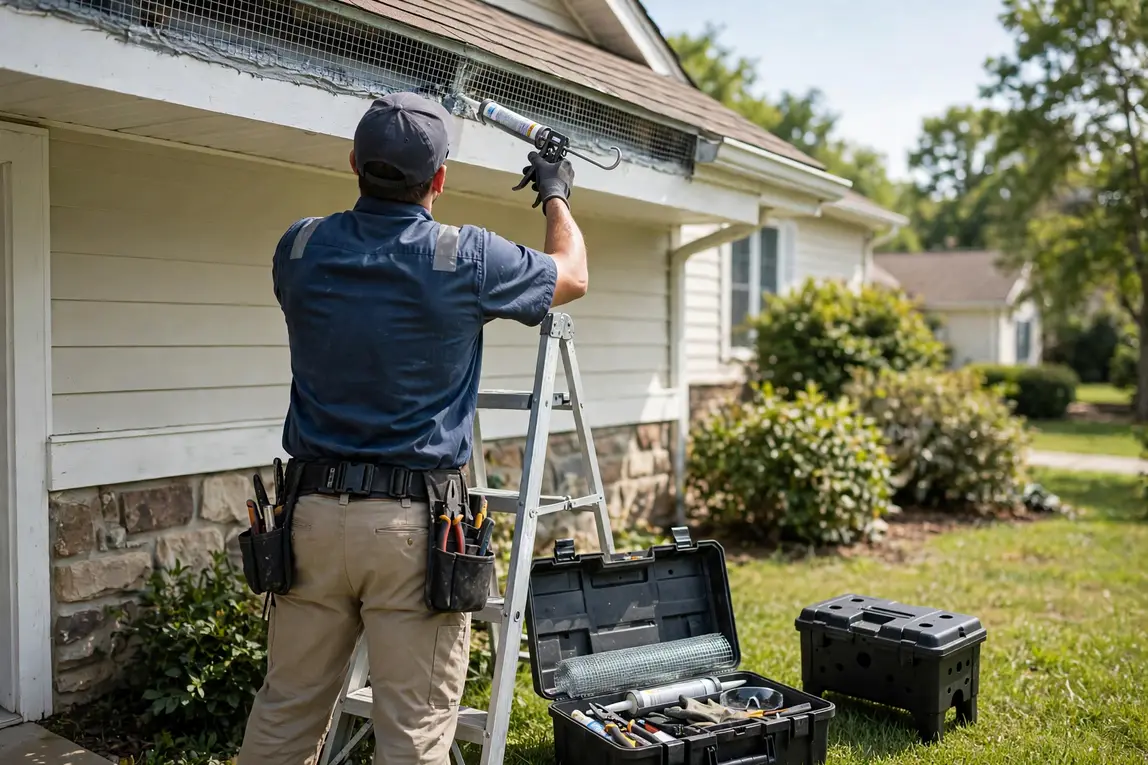
Every gap found is listed for sealing: foundation cracks, gaps around pipes and wires, garage door corners, roofline gaps. Sealing is what keeps the next rodents out after trapping clears the current ones.
Food and shelter advice
The visit lists the attractants to remove — pet bowls at night, open pantry bags, bird seed spilling by the foundation, firewood against the house — because food at the wall draws rodents to the gaps.
Follow-up checks
Follow-up visits check whether the traps are still catching, whether new signs appear, and whether the sealed entries are holding. Rodent work is checked over weeks, not days.
What happens when you call
Describe the signs
On the call, describe what you have seen — droppings, scratching at night, gnaw marks, a mouse in the kitchen — and where. The signs point to the runs and the entry.
Inspection of runs and entries
The visit follows the signs along the runs to the entry points, checks the attic and basement, and maps the food and water drawing rodents to the house.
Traps placed on the runs
Traps go onto the runs rodents use — along walls, behind appliances, in the attic — placed where the signs are thickest, not where they are convenient.
Entries sealed
The gaps are listed for sealing, and the sealing is done as the trapping clears the population inside, so new rodents cannot replace the ones removed.
Follow-up over weeks
Follow-up visits check the traps, look for new signs, and confirm the sealed entries are holding. The work is done when the signs stop, not when the first traps fill.
How the work is done
Trapping follows the runs. Rodents travel along edges — wall lines, the backs of appliances, the attic runs — and they avoid open space. Traps placed along those edges catch rodents; traps in the middle of a room catch dust. The inspection's map of droppings and rub marks is what puts the traps in the right places, and the follow-up visits move traps that are not catching to the runs that are active.
Sealing is the lasting half of the work. A house mouse passes through a gap the width of a pencil, so the sealing list is detailed: the gap where the gas line enters, the corner of the garage door, the crack where the foundation meets the sill, the vent that has lifted. Materials matter — rodents chew through foam and soft wood, so the sealing uses materials they cannot chew through. Trapping without sealing is a subscription to the same problem.
Food control decides whether new rodents come. A pet bowl left out overnight feeds the mice that the traps are trying to remove. Bird seed spilling by the foundation draws rodents to the wall every evening. Open pantry bags feed the population inside. The visit lists the attractants alongside the trapping plan, because a house with food at the wall will always have rodents at the gaps.
Before the visit
Clear access to baseboards and the rooms with activity, pick up pet bowls and toys, and note where you have seen activity — the inspection follows your evidence.
Problem → solution
Problem
Droppings cluster behind the stove and along one basement wall, and scratching sounds come from the attic at night. A gap shows at the garage door corner.
Solution
The visit maps the runs from the kitchen to the basement wall, places traps on the active runs, and lists the garage gap and the utility-line gaps for sealing. The pet bowl comes in at night, the pantry bags are sealed — and the follow-up visits show the signs stopping.
Problems rodent control solves in Worcester
Droppings in the kitchen
Droppings behind the stove or in pantry corners mean mice are running a route to food. The visit follows the droppings along the run to the entry point, then traps on the run and seals the entry.
Scratching in the walls at night
Scratching and scurrying at night, especially in walls and attics, points to rodents active after dark. The visit locates the run and the entry — often at the roofline or the garage — and traps there.
Rats in the basement or yard
Rats use sewers, drains and fence lines to reach the house, and they enter through larger gaps than mice. The visit checks the drains and the foundation, and the plan fits the rat, not the mouse.
Rodents every fall
Rodents move indoors every fall ahead of the cold, and a house with open gaps gets the same visit every year. Sealing the entries found this year is what breaks the annual pattern.
Other pest services in Worcester
Inspection-led ant control for Worcester homes and businesses.
Inspection-led termite control for Worcester homes and businesses.
Inspection-led spider control for Worcester homes and businesses.
Inspection-led cockroach control for Worcester homes and businesses.
Inspection-led mosquito control for Worcester homes and businesses.
Inspection-led flea & tick control for Worcester homes and businesses.
Inspection-led general pest control for Worcester homes and businesses.
Frequently asked questions
Straight answers to the questions Worcester homeowners ask most.
Through gaps the width of a pencil — where utility lines enter, at garage door corners, through foundation cracks, and where the sill meets the foundation. The inspection finds the gaps; sealing them is what keeps mice out.
House mice are small and live within a short run of food, usually in kitchens and pantries. Rats are larger, warier, and use sewers, drains and rooflines. The visit identifies the species from the signs, because the plan differs.
Rodents move indoors ahead of the cold, looking for warmth, food and shelter. Fall is when the pressure peaks — and when sealing the entries found this year prevents next fall's visit.
No — trapping removes the rodents inside, but the gaps that let them in stay open. Sealing the entry points is the half that lasts; without it, new rodents replace the ones removed.
Yes — rodents in the attic gnaw wiring and insulation, contaminate stored items, and use the roofline gaps to come and go. The visit checks the attic runs and the roofline entries, and the plan covers both.
Rodent Control problem in Worcester?
Call now — we will connect you with an independent local provider for an inspection and a clear plan for rodent control.
Call NowTalk to a local pest control professional
One call connects you with a local professional for Worcester and nearby towns. Describe what you are seeing — where, when, and how often — and the visit is arranged from there.
Mon–Fri 7:00 AM–10:00 PM ET · Sat 8:00 AM–10:00 PM ET · Sun 7:00 AM–9:00 PM ET
Service area
Shrewsbury, MA · Auburn, MA · Millbury, MA · Grafton, MA · Holden, MA · Westborough, MA · Northborough, MA · Leicester, MA · Sutton, MA · Oxford, MA · Boylston, MA · Paxton, MA
Worcester Pest Control Pros is a referral service connecting customers with local pest control professionals; it is not itself the service company.