Ant Control in Worcester, MA
Ants in a Worcester kitchen are rarely a kitchen problem. They are a trail problem: a line of workers running between a nest outside — or inside damp wood — and a food or water source in the home. Spraying the ants you can see breaks the trail for a day. Finding the nest and the entry points is what ends the visits.
Call Now
Describe what you are seeing and where you are — a local pest control professional is connected from there.
Call NowMon–Fri 7:00 AM–10:00 PM ET · Sat 8:00 AM–10:00 PM ET · Sun 7:00 AM–9:00 PM ET
How ant control works in Worcester homes
Carpenter ants do not eat wood. They excavate nesting galleries in damp or water-damaged wood — around leaking windows, in porch columns, under flat roofs, and behind siding that has been taking on water. Years of tunnelling weaken the wood, and the parent colony is often in a tree or stump outside, with satellite nests in the walls. That split is why a Worcester ant visit spends as much time outside the house as inside it.
Pavement ants and odorous house ants are the small ants most Worcester homeowners meet in kitchens and bathrooms. Pavement ants nest under slabs, patios and foundations and push sand out of cracks. Odorous house ants — named for the smell when crushed — run long trails to sweets and grease, and they split into new colonies when disturbed, which is why a hardware-store spray often makes the problem wider instead of smaller.
Ant activity follows water and warmth. Leaking gutters, wood in contact with soil, firewood stacked against the house, and mulch piled against siding all create the damp conditions carpenter ants look for. Inside, the trail usually leads to a pet bowl, a pantry shelf, a dishwasher leak, or a bathroom with poor ventilation. The inspection maps the trail before anything is applied.
- Species identified first — carpenter, pavement, odorous house, or pharaoh
- Nest located, not just the trail — parent colony and any satellite nests
- Entry points mapped: foundation cracks, utility penetrations, window frames
- Damp wood and water sources noted for repair, not just treatment
- Follow-up visit planned when activity continues after the first treatment
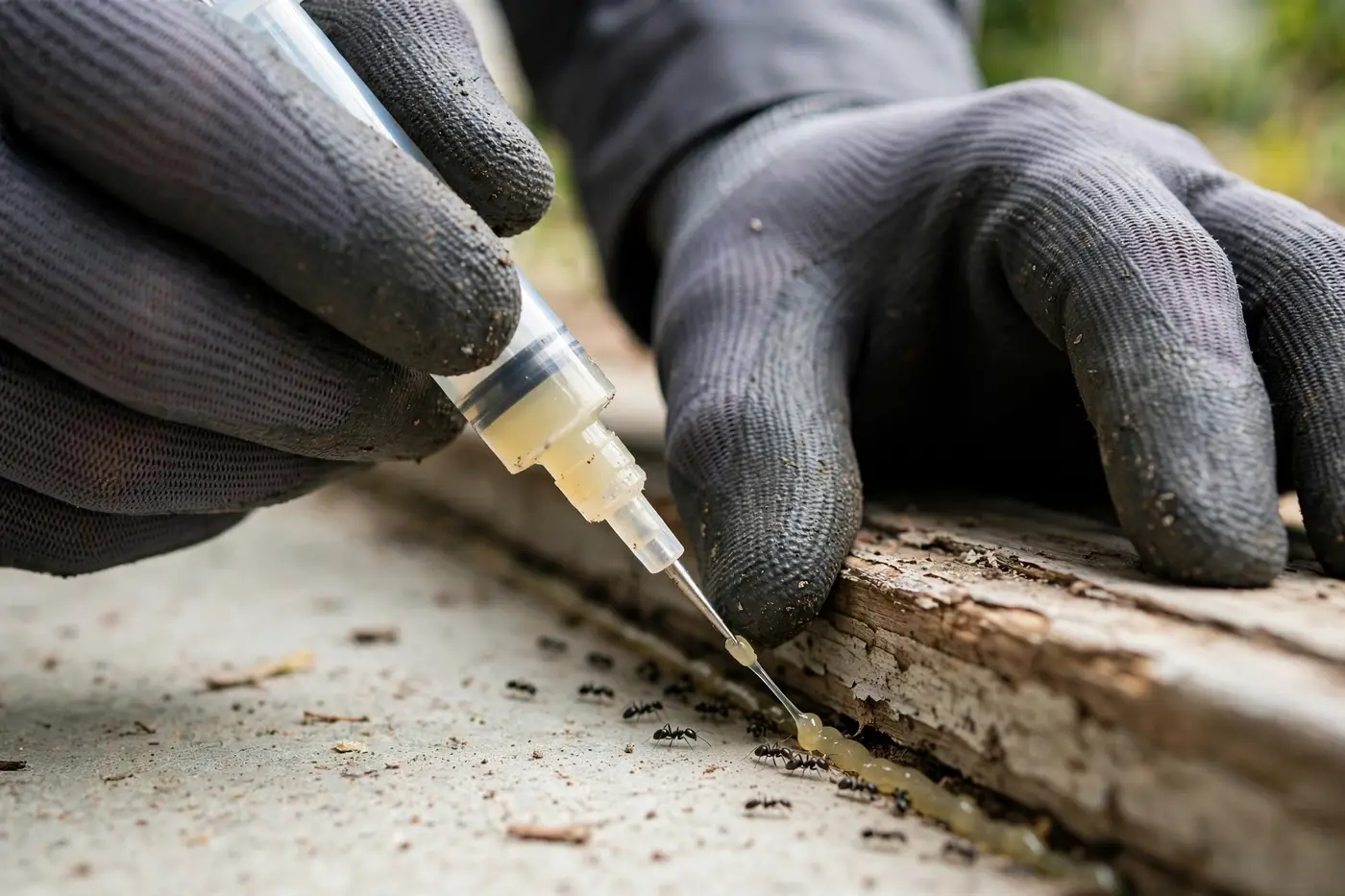
What ant control includes
Species identification
The ants are identified before any product is chosen. Carpenter ants need a nest hunt; odorous house ants need a baiting approach that the colony carries home; pavement ants need the slab and foundation edge treated. Identification is the visit's first job.
Nest location
Trails are followed at the time ants are active — often in the evening for carpenter ants, when workers move along fences, deck rails and tree limbs. A torch after dark shows in minutes what a daytime visit guesses at.
Interior treatment
Inside work targets the trails and harborages: kitchens, bathrooms, basements and the wall voids behind them. Products are placed where ants travel, not broadcast across living space.
Exterior barrier
The outside of the home is treated where ants enter — foundation lines, door and window frames, and the points where utility lines pass through the wall — so new colonies meet the barrier first.
Entry-point sealing advice
Every gap found is listed for the homeowner: foundation cracks, gaps around pipes and wires, damaged window frames. Sealing is what keeps the next colony out after treatment ends the current one.
Follow-up check
Ant colonies do not always collapse on the first visit. The plan includes a follow-up check, and the visit notes say what to watch for — a shorter trail, fewer workers, or activity in a new place.
What happens when you call
Describe the trail
On the call, describe where you see ants, when they appear, and whether they are large black ants or small brown ones. That description shapes what the visit brings.
Inspection inside and out
The visit maps the trail from the kitchen or bathroom back to the entry point, then continues outside to the foundation, the yard edge, and any damp wood or tree holding a parent colony.
Species and nest confirmed
The ants are identified and the nest — or nests — located. Satellite nests in walls are common with carpenter ants, and finding them is what separates a lasting result from a repeat visit.
Treatment placed
Treatment is placed on the trails, at the nest, and along the entry points. Baits are used where the colony must carry the product home; direct treatment where the nest is exposed.
Sealing and follow-up
Entry points are listed for sealing, and a follow-up visit is set if activity continues. The homeowner gets a plain account of what was found and what happens next.
How the work is done
Treatment choice follows the species. Carpenter ants get a nest-focused treatment: the gallery is treated directly where it can be reached, and bait is placed on the trails where it cannot. The goal is the colony, not the workers on the counter. Pavement ants get treatment at the slab edge and the foundation cracks they use, and odorous house ants get slow-acting bait that foragers carry back to the nest instead of a spray that splits the colony.
Timing matters as much as product. Carpenter ant trails are clearest in the evening, when workers move between the parent colony and the house. A visit planned for the active hours finds the trail's end — usually a tree, a stump, or a damp section of the house — instead of treating a guess. Spring is when winged swarmers appear indoors, and a swarmer sighting is always worth reporting: it means a mature colony is already in or near the house.
Prevention is part of the service, not an afterthought. Firewood moves away from the house wall. Mulch is pulled back from siding. Gutters are checked so water does not pool at the foundation. Pet bowls are picked up at night. None of this is complicated, and all of it makes the next ant season shorter.
Before the visit
Clear access to baseboards and the rooms with activity, pick up pet bowls and toys, and note where you have seen activity — the inspection follows your evidence.
Problem → solution
Problem
A trail of large black ants crosses the kitchen counter every evening, and a few winged ants appear at the windows in spring. The trail disappears into the wall behind the sink.
Solution
The visit follows the evening trail to a damp sill plate under a leaking window and a parent colony in a stump behind the fence. The nest is treated, the trail is baited, the window leak is listed for repair — and the counter stays clear.
Problems ant control solves in Worcester
Carpenter ants in walls
Large black ants, sawdust-like frass below a window or beam, and winged ants indoors in spring all point to carpenter ants nesting in damp wood. The visit finds the gallery and the moisture feeding it.
Kitchen ant trails
Small ants running a steady line to the pantry or the pet bowl are usually pavement or odorous house ants. The trail is followed to the entry point, and bait is placed so the colony carries it home.
Ants after rain
Heavy rain pushes ants out of saturated soil and into the house through foundation cracks. The visit checks the foundation edge and the drainage that is sending water toward the house.
Ants in the bathroom
Bathroom ants usually mean moisture — a slow leak, poor ventilation, or damp wood behind tile. The inspection looks for the water source first, because the ants are following it.
Other pest services in Worcester
Inspection-led termite control for Worcester homes and businesses.
Inspection-led spider control for Worcester homes and businesses.
Inspection-led cockroach control for Worcester homes and businesses.
Inspection-led mosquito control for Worcester homes and businesses.
Inspection-led rodent control for Worcester homes and businesses.
Inspection-led flea & tick control for Worcester homes and businesses.
Inspection-led general pest control for Worcester homes and businesses.
Frequently asked questions
Straight answers to the questions Worcester homeowners ask most.
Carpenter ants lead the local call log, followed by pavement ants and odorous house ants. Carpenter ants tunnel in damp wood and are the ones to take seriously; the small kitchen ants are usually pavement or odorous house ants following a food trail.
Spraying the ants you can see breaks the trail, not the colony. The nest is still there, and some species split into new colonies when disturbed. A visit finds the nest and the entry points, which is what ends the visits.
Yes — winged ants indoors in spring usually mean a mature colony is already in or near the house. Note where you saw them and how many, and describe it on the call; it shapes what the visit looks for first.
Store food sealed, wipe up spills and crumbs, pick up pet bowls at night, and fix the leaks that keep wood and walls damp. Sealing the gaps around pipes and window frames closes the routes ants use.
No — carpenter ants excavate galleries in damp or water-damaged wood but do not eat it. The damage is still real: years of tunnelling weaken beams, sills and porch columns, which is why the moisture source matters as much as the ants.
Ant Control problem in Worcester?
Call now — we will connect you with an independent local provider for an inspection and a clear plan for ant control.
Call NowTalk to a local pest control professional
One call connects you with a local professional for Worcester and nearby towns. Describe what you are seeing — where, when, and how often — and the visit is arranged from there.
Mon–Fri 7:00 AM–10:00 PM ET · Sat 8:00 AM–10:00 PM ET · Sun 7:00 AM–9:00 PM ET
Service area
Shrewsbury, MA · Auburn, MA · Millbury, MA · Grafton, MA · Holden, MA · Westborough, MA · Northborough, MA · Leicester, MA · Sutton, MA · Oxford, MA · Boylston, MA · Paxton, MA
Worcester Pest Control Pros is a referral service connecting customers with local pest control professionals; it is not itself the service company.